
FPGA Design and Application Considerations for the Lattice LIFCL-40-9BG256C
The Lattice LIFCL-40-9BG256C, a member of the Lattice Nexus platform, represents a significant advancement in low-power, high-performance FPGAs. Targeting a wide array of applications from embedded vision to industrial control and communications, this device requires a thoughtful design approach to fully leverage its capabilities. This article outlines key considerations for its effective implementation.
Power Management and Optimization
A primary advantage of the Nexus platform is its exceptionally low power consumption. To capitalize on this, designers must be proactive. Utilizing the integrated power management features is critical for dynamic power reduction. The device supports advanced sleep modes and fine-grained clock gating. Meticulous management of clock domains and the strategic use of low-power modes during idle periods can drastically reduce overall system power. Furthermore, leveraging the on-chip switching regulators can simplify the power delivery network (PDN) and improve overall efficiency.
I/O Planning and Signal Integrity
The device's 256-ball caBGA package offers a multitude of user I/Os supporting various standards like LVCMOS, LVDS, and sub-LVDS. Successful I/O planning is paramount. A rigorous pin-out strategy must be developed early in the design cycle to avoid signal integrity issues and routing congestion. Designers should carefully review the bank groupings and voltage requirements (VCCIO) to ensure compatibility with external devices. For high-speed interfaces, adherence to layout guidelines for differential pairs, controlled impedance, and proper termination is non-negotiable to ensure signal integrity and prevent data corruption.
Leveraging Hard IP and Programmable Fabric
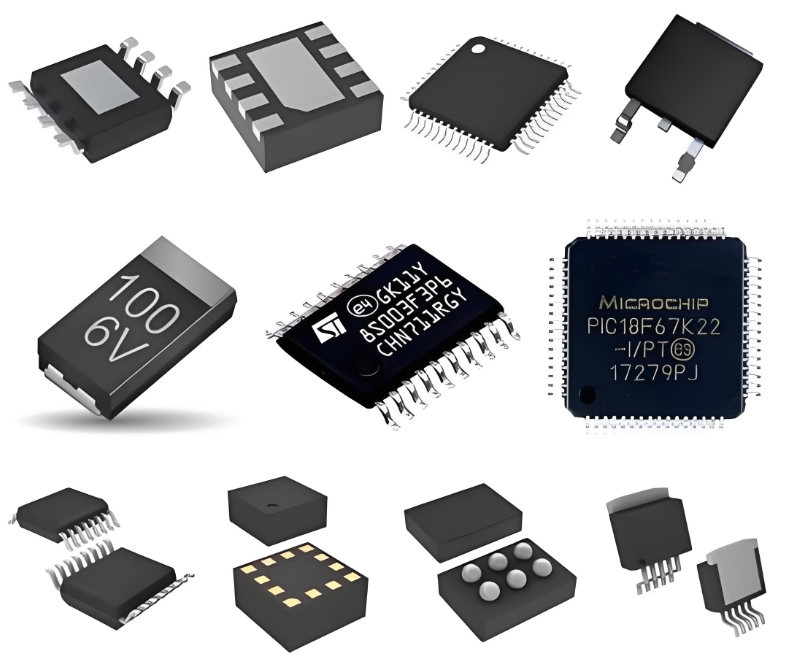
The LIFCL-40-9BG256C contains valuable hardened intellectual property (IP) blocks, including EBR SRAM blocks, DSP blocks, and a dedicated PCI Express hard IP block. Offloading these functions from the programmable fabric frees up logic resources, reduces dynamic power, and increases deterministic performance. The design flow should prioritize mapping relevant functions to these hard blocks. Simultaneously, efficient coding styles (e.g., using synchronous design practices) are necessary to maximize the utilization and performance of the programmable logic cells (LUTs, Registers) and routing resources.
Utilizing the sysCLOCK and sysDSP Blocks
The on-chip Phase-Locked Loops (PLLs) within the sysCLOCK block provide robust clock management. Generating clocks with precise frequency and phase relationships is essential for synchronous design. These PLLs should be used to de-skew clock signals, manage clock domain crossings (CDC), and reduce electromagnetic interference (EMI) through spread-spectrum clocking. The hardened sysDSP blocks are highly efficient for mathematical operations. For DSP-intensive applications like filtering or FFT, mapping algorithms to the sysDSP blocks significantly enhances performance and efficiency compared to implementing the same functions in soft logic.
Design for Reliability and Security
For industrial and automotive applications, reliability is a cornerstone. The Nexus platform's inherent soft error immunity features, such as advanced configuration memory scrubbing, must be enabled to mitigate the effects of radiation-induced upsets. From a security perspective, the FPGA supports bitstream encryption using AES-256 and authentication to protect intellectual property from reverse engineering and cloning. These features should be integral to the design deployment strategy for any sensitive application.
Development Tool Flow
A smooth design process hinges on mastery of the toolchain. Using the latest version of Lattice Radiant or Lattice Propel is recommended to access the most recent device support, IP libraries, and optimization algorithms. Performing thorough timing analysis and simulation at every stage is crucial to identify and resolve setup/hold violations and functional errors early. The tools' power analysis features can also provide valuable estimates to guide power optimization efforts.
ICGOODFIND: The Lattice LIFCL-40-9BG256C FPGA is a versatile solution for power-sensitive designs. Success hinges on a holistic strategy that encompasses aggressive power management, meticulous I/O and clock planning, maximized use of hardened IP, and a robust reliability and security posture. A disciplined design approach, supported by the manufacturer's tools and guidelines, is essential to unlock the full potential of this platform.
Keywords: Low-Power Optimization, Signal Integrity, Hard IP Utilization, Clock Domain Crossing (CDC), Bitstream Encryption

